

Paideia Folkhögskola: Scandinavian Folkbildning Meets Jewish Learning
Folkbildning is a distinctive Scandinavian idea. Within the concept of folkbildning lies the democratic notion that everyone, no matter one’s social or economic background, has the equal right to not only education, but also to a rich inner life. Those who learn at a Folkhögskola are not called students or pupils, but participants. Together we create the learning environment that is Paideia Folkhögskola.
The name Paideia derives from the ancient Greek notion of education. As Alexander the Great conquered the Near East there was a cultural and intellectual meeting between the ancient Greeks and Jewish scholars. This meeting influenced much of Jewish thought as we know it today. By taking on a European name, Paideia Folkhögskola reflects its commitments to the idea that everyone is welcome to learn together with us. Open learning and Jewish literacy can shape both our identity and community, especially in the meeting between Jewish thought and folkbildning.
Jewish tradition embraces learning throughout one’s lifetime. To continue learning together with one’s peers is considered one of the highest Mitzvot (commandments). The combination of Jewish education and folkbildning is at the heart of Paideia Folkhögskola. Both traditions share the view of learning as a virtue in itself, and how empowered learning happens.
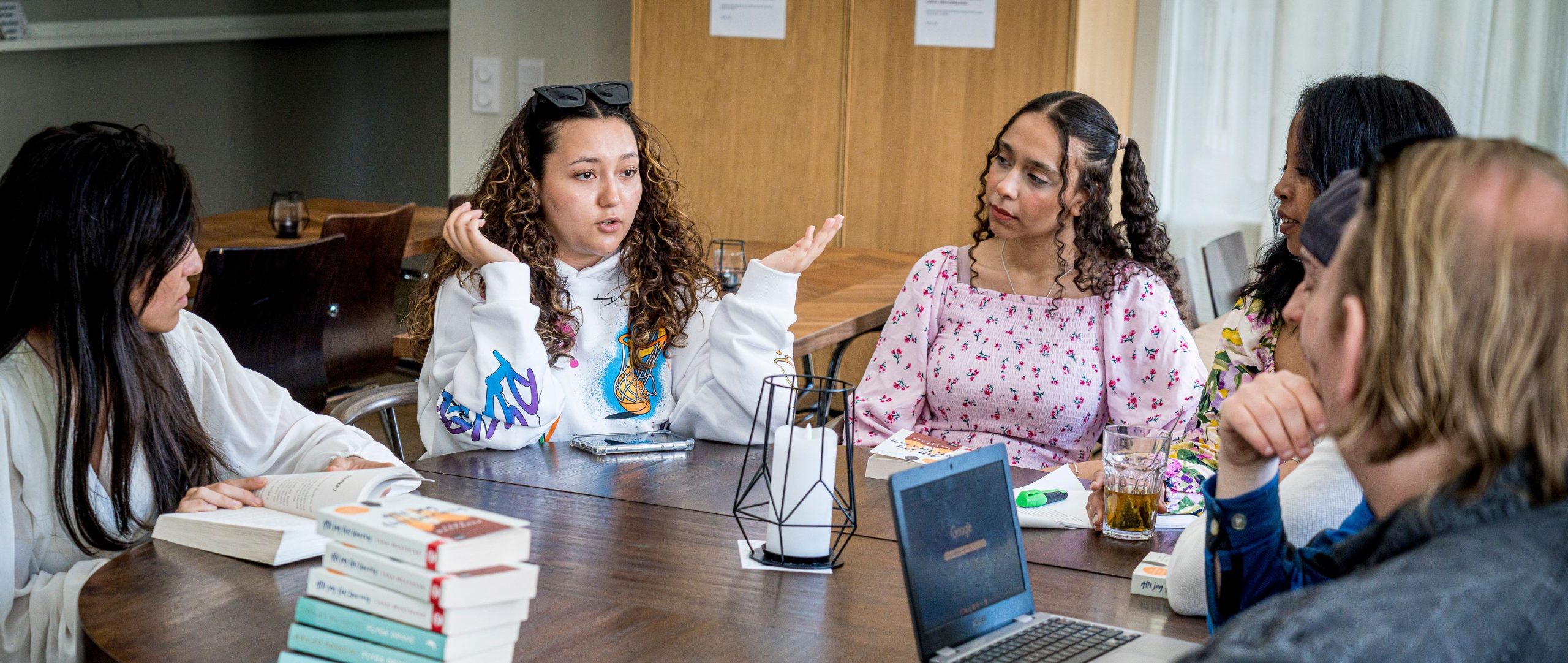
Both folkbildning and Jewish tradition emphasize learning as a social process, rather than an individual. In Jewish tradition, learning is often done in chavruta, pairs. The word chavruta is derived from the Hebrew word chaver, meaning friend. Chavruta is based on two learning partners who discuss and debate the material they are learning. Similarly, folkbildning is based on participants exploring ideas together through conversation and shared interpretation. The participants should actively engage with the material rather than passively receiving it.
Furthermore, within folkbildning participants shape the learning process together with their teacher. Each participant brings their own experiences and viewpoints to the sessions, and the diversity of perspective is essential to the learning. Learning is thus collective discovery. Likewise, within chavruta-studies questioning is embraced as part of the process, as the pair struggle together with the material. Chavruta and folkbildning share the idea that learning is not passive, it’s an active process of wrestling with ideas and creativity.
Folkbildning has strong historical ties with the democratic and social movement. The Scandinavian Folkhögskola strives to ensure that everyone is included as society changes and evolves. Similarly, within Jewish learning, education is a way to connect with the broader Jewish community and together understand how Jewish tradition and culture can be understood in our contemporary life.
In short, both folkbildning and Jewish learning traditions build on the idea that people learn best by thinking together. Through dialogue, sharing struggles, and challenging each other, new knowledge and understandings are formed. Everyone at Paideia Folkhögskola participates in the life long journey of learning and helps shape both identity and community across traditions.