

Application
Application is closed.
Course information
Contact
JEWISH LITERATURE(S) IN 20TH-CENTURY EUROPE: MANY LANGUAGES, SHARED WORLDS
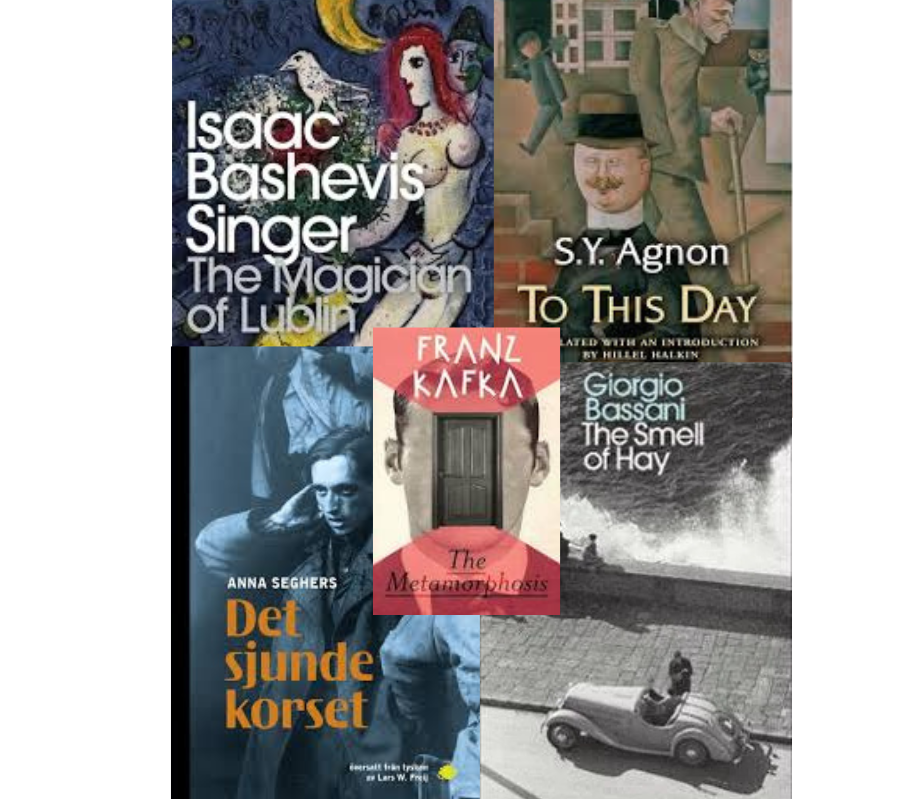
This course explores modern European Jewish literature of the twentieth century in its linguistic plurality both in Jewish languages (Hebrew, Yiddish, and Ladino) and in European national languages (German, French, Russian, Italian, Polish, and more). Attention will be given to the spaces where Jewish life took place—from the Eastern-European ‘shtetl’ to the yeshiva, from the bustling, secular metropolis like Vienna to the post-Holocaust ruins of Jewish Europe—as well as to the literary and cultural geography of Jewish Europe, i.e. the main literary hubs and cultures where Jewish literatures flourished. Each lecture will focus on one or two major figures of European Jewish literary history, such as Franz Kafka, S.Y. Agnon, I.B. Singer, Giorgio Bassani, and Anna Seghers.
We will read mostly short fiction and poetry by European Jewish writers, together with some multimedia materials, in order to explore how literary texts represent or problematize the Jewish experience across time and geography. We will consider how Jewish writers responded to issues such as modernity, technology, Gentile culture, integration and/or assimilation, migration, and persecution. Recurring themes include exile and belonging, religious tradition and secularism, memory and trauma, gender difference and women’s voices, and, most importantly, the role of language(s) in shaping Jewish identity across national borders, in or out of Jewish culture or of specific national cultures.
By the end of the course, participants will have developed a broad introductory understanding of major European Jewish writers, their works, and their historical contexts. They will also gain insight into the formal features, recurring themes, and genres of Jewish literature, and into the ways literary texts both reflect and shape the modern Jewish experience within and beyond European culture.
The course is given in collaboration with Paideia – the European Institute for Jewish Studies in Sweden.
Course Structure
Each meeting will entail a mix of lectures and group discussions of the reading assignments. Occasionally, the teacher will offer brief excerpts during class time for discussion.
Reading of assignments before lectures/discussions is always expected. Materials will be between 10 to 50 pages.
Prior Knowledge
The course is given in English.
No prior knowledge is expected. The participants should be just ready to read the assigned materials in order to familiarize themselves with the authors discussed in class. Interest in and curiosity for the various historical and cultural aspects of the European Jewish experience, as they arise from the literary texts discussed, is the main requirement.
To apply for this course, you need basic computer skills and knowledge of how to use the digital platform Zoom.
Course Material
Course material is included in the cost for this course.
About the Teacher
Dr Giacomo Loi is an Azrieli International Postdoctoral Fellow at the Department of Hebrew and Comparative Literature at the University of Haifa and visiting scholar at Sorbonne Nouvelle, Paris. He is particularly interested in the complex entanglements between Greco-Roman antiquity and modern Jewish culture. In the past, he has worked at the Fondation pour la Mémoire de la Shoah, Paris, taught Classics and Jewish studies at Johns Hopkins University, Baltimore, and is among the initiators and leaders of the project Gentile Antiquity: The Reception of Antiquity in Modern Italian Jewish Literature. He has received the Kingdon Award for New Perspectives in Jewish Studies from Columbia University and has lectured at several universities in the US, Israel, France, the UK, Italy, Switzerland, and Sweden. He has previously taught Jewish literature in the Paideia One-Year Program.
Photo: A collage featuring book covers by Franz Kafka, S. Y. Agnon, I. B. Singer, Giorgio Bassani, and Anna Seghers.
More Information About Profile Courses
Application
Application is closed.